01
Partnership, intersectionality and AI in marketing
EqualsAI4ALL training
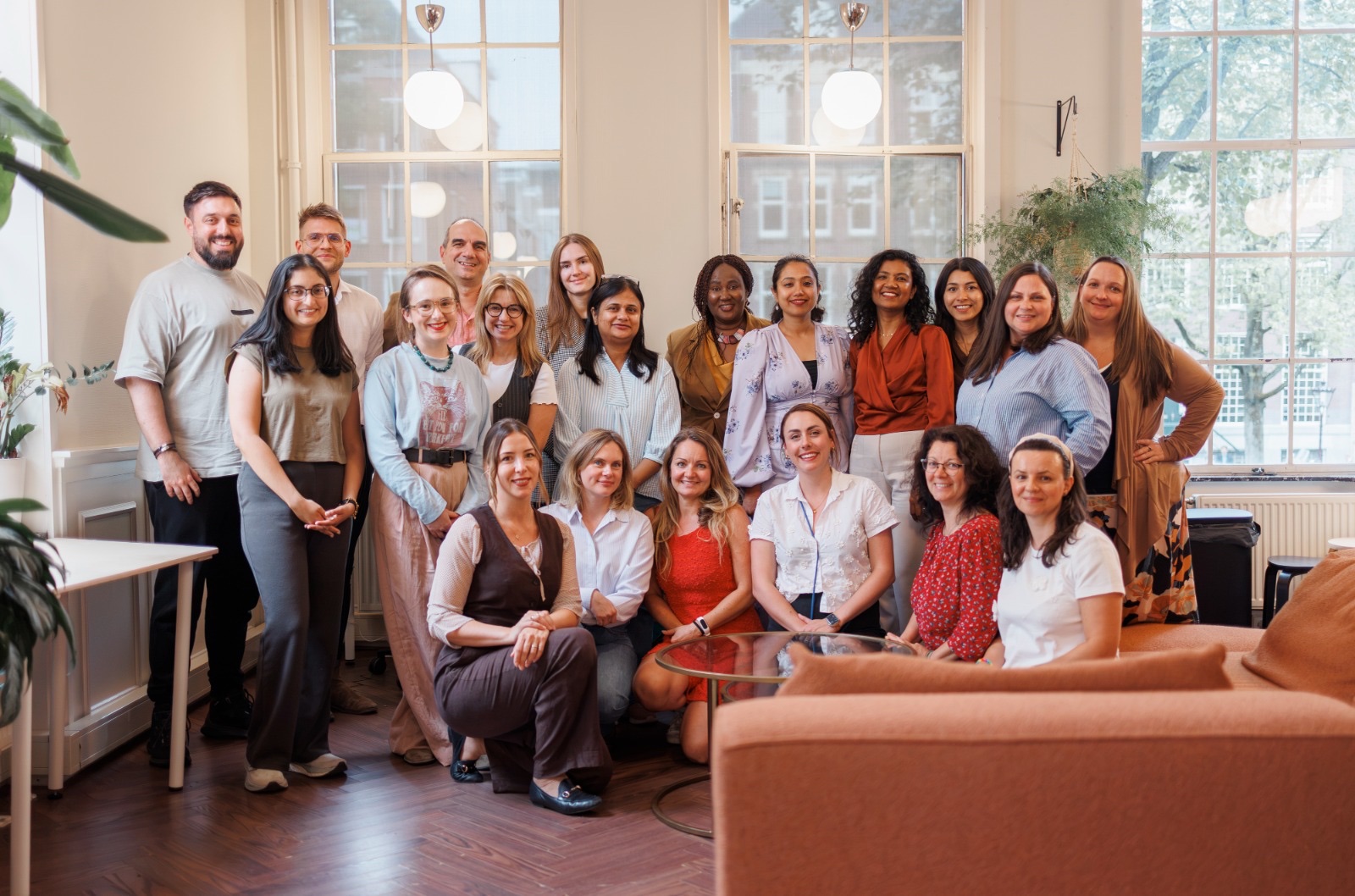
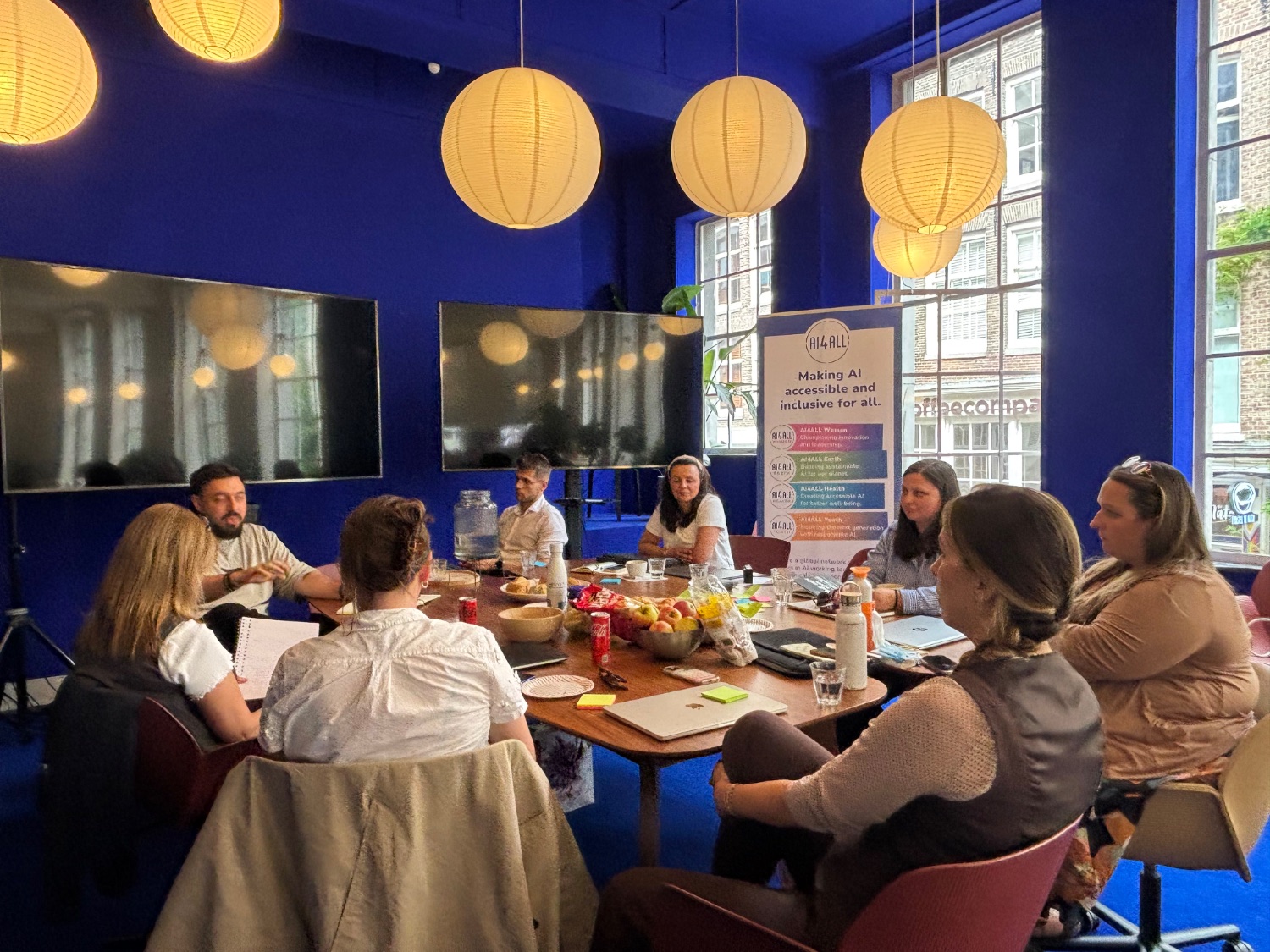
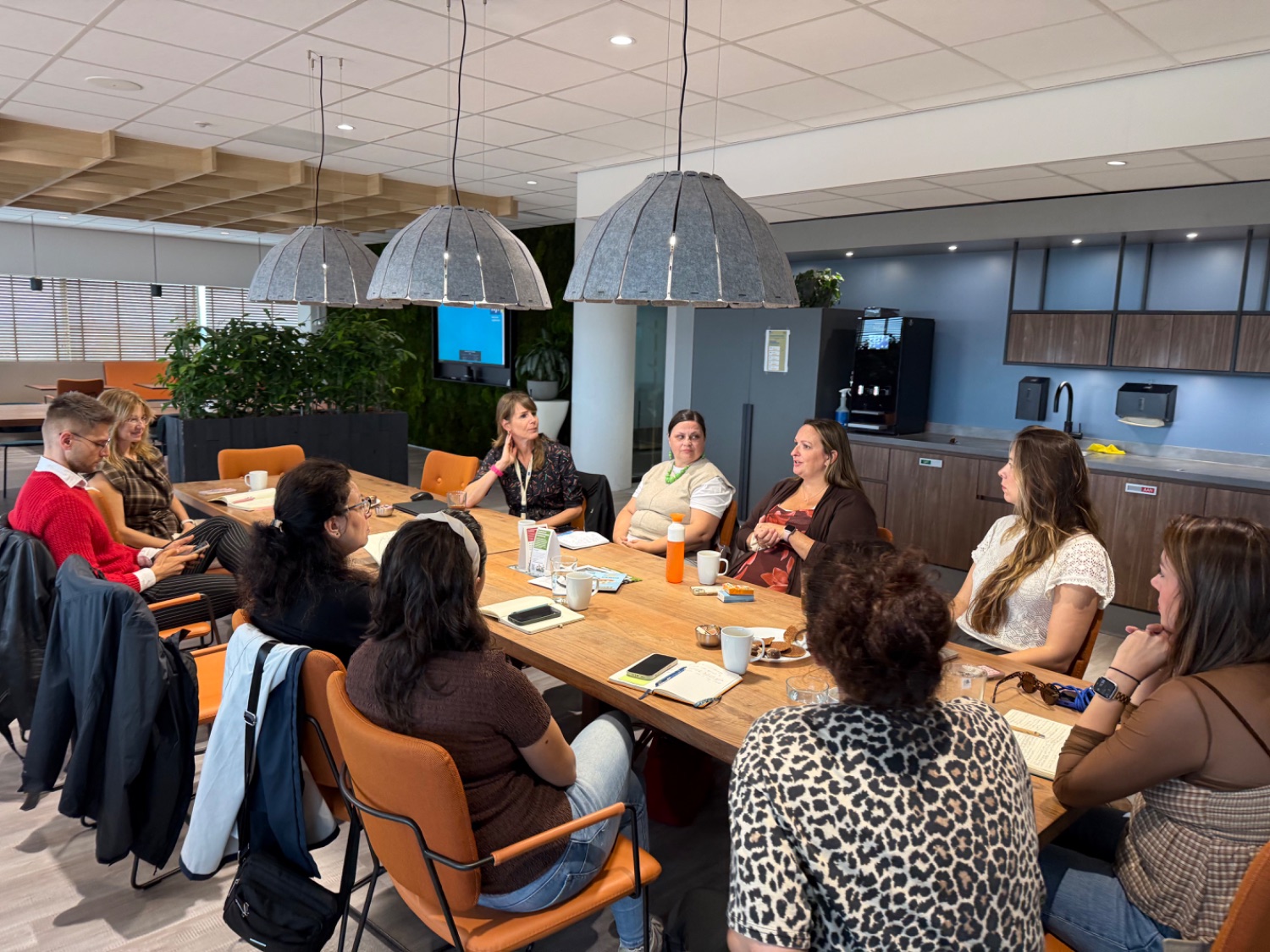
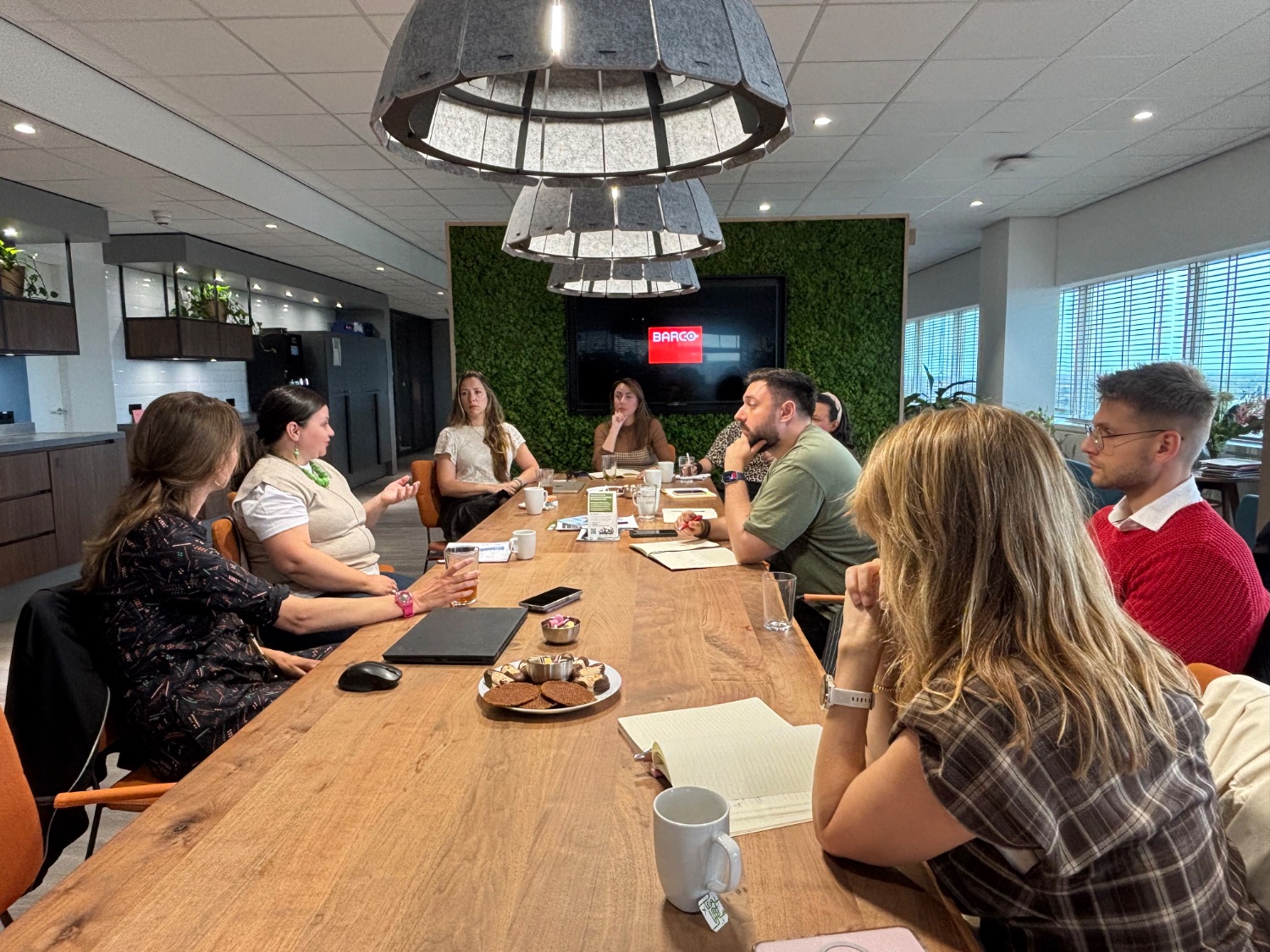
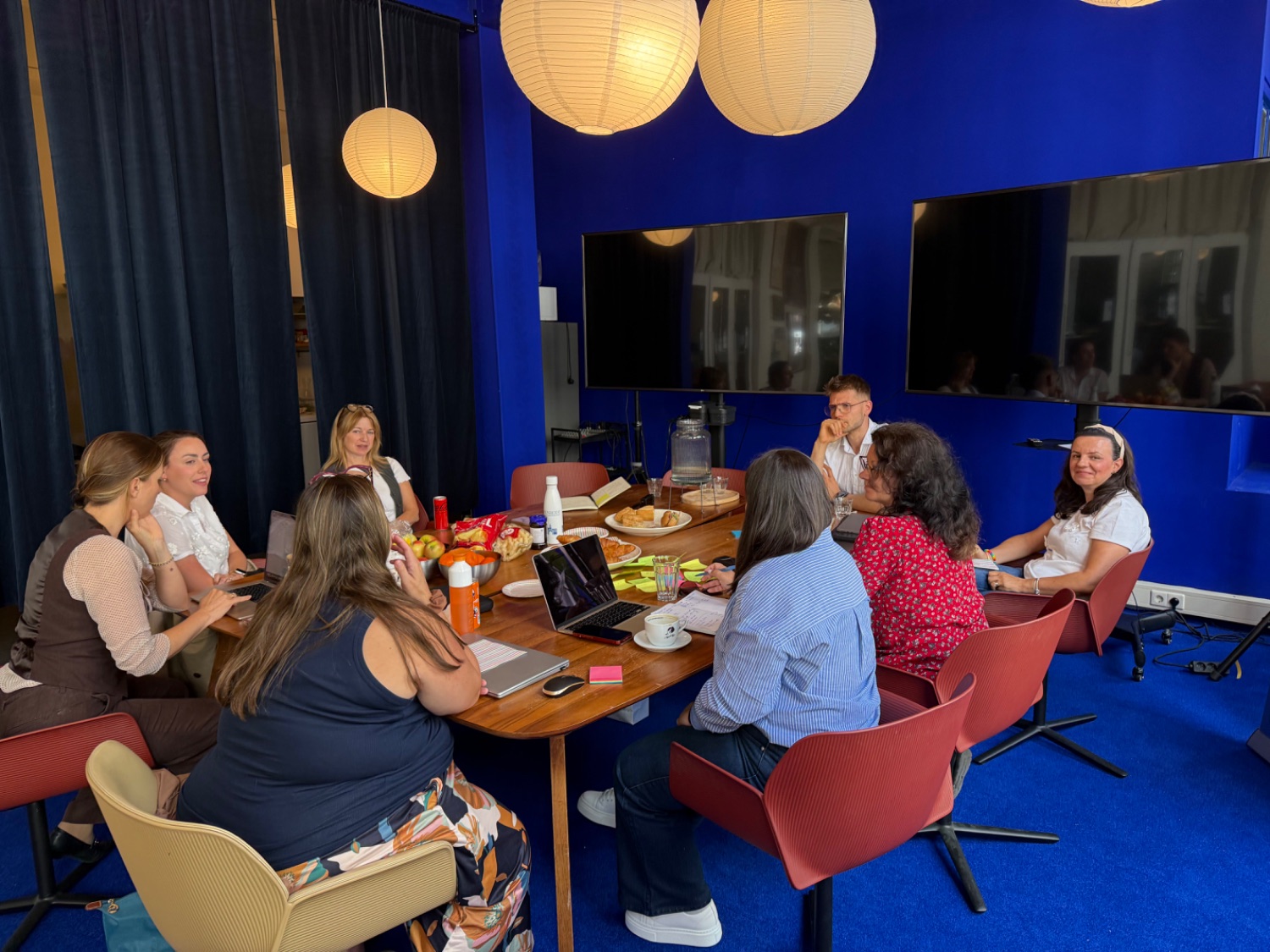
On the first day we met face to face and began by looking at what each of us has built so far on AI and youth empowerment, and at the working methods we use. It quickly became clear how complementary our programmes are. We then talked about intersectionality, a concept we have been working with for several years, and about what it looks like in practice in each organisation's activities.
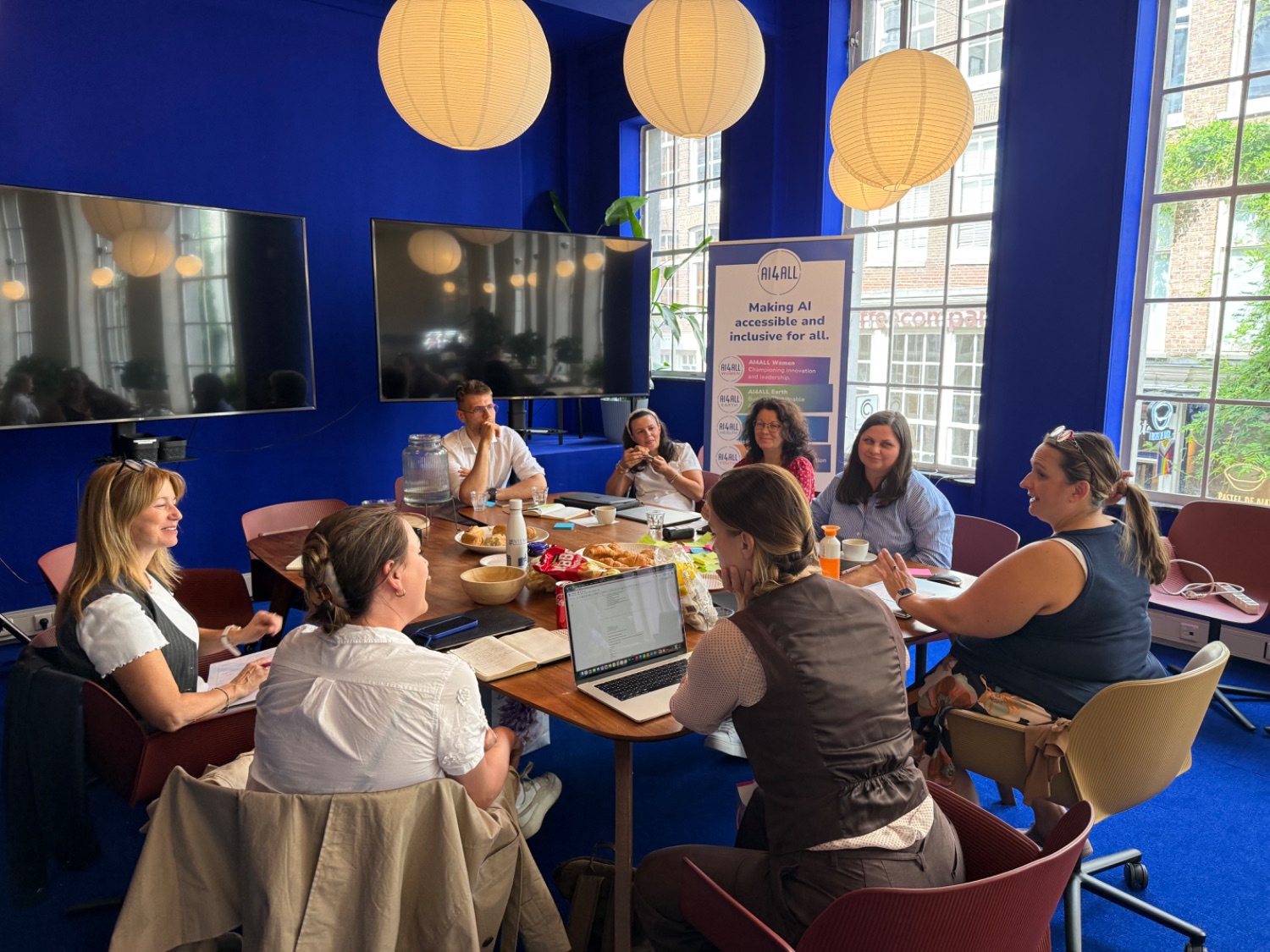
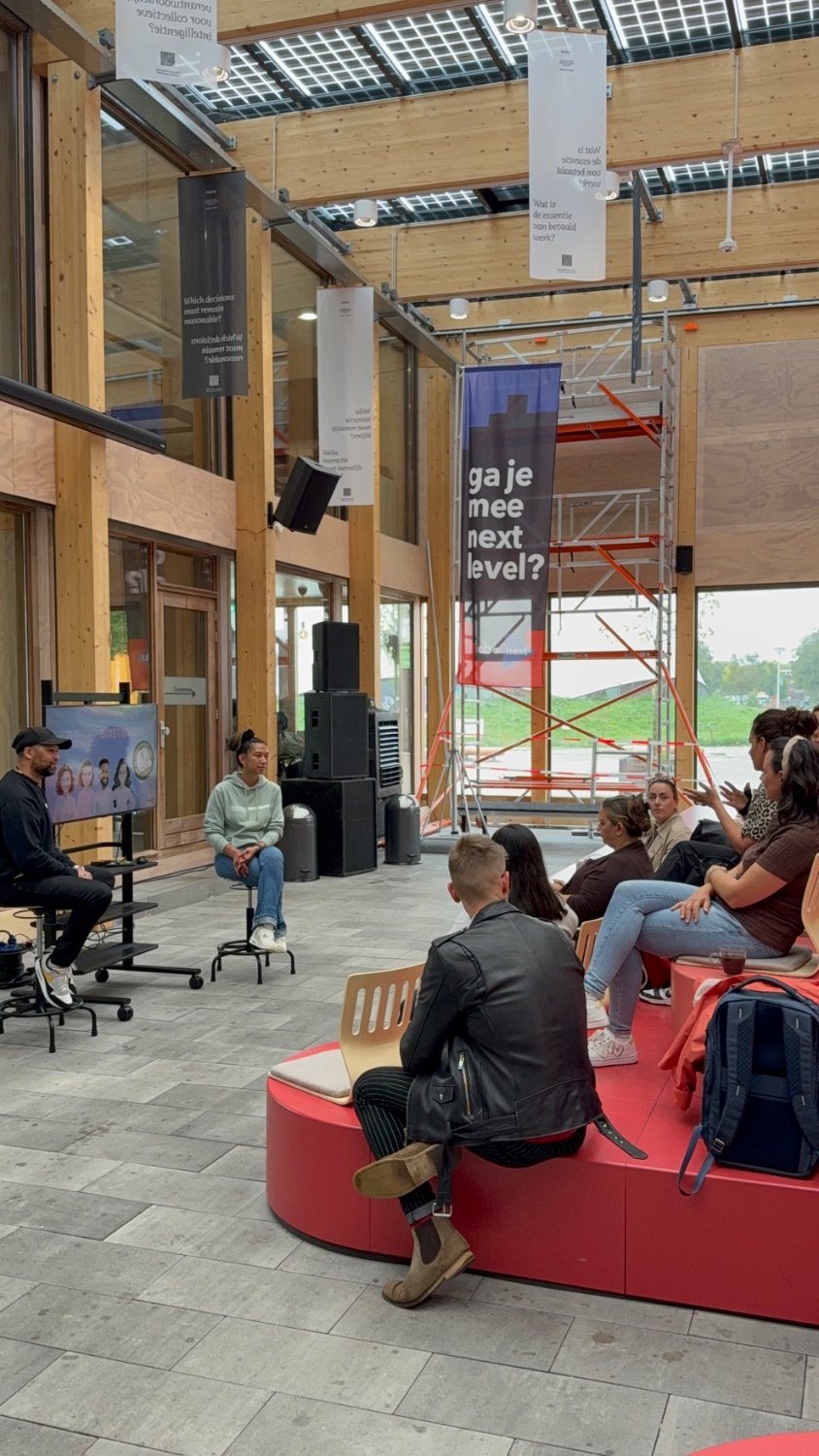
After that we watched AI4ALL deliver a training session on using AI in marketing, and heard how they fund their work.
- →We asked the questions we had come with: how partnerships work in Erasmus+, which learning methods work with AI, how we raise the quality of youth work.
- →We learned how to set up an LLM properly: personality, tone of voice, content that sounds like us rather than like a robot.
- →We worked on real cases from the organisations in the room: automated workflows, images, videos and text generated step by step.
02
The Hmm: AI without devices, and games for young people
The Hmm · NDSM-PleinOBA library
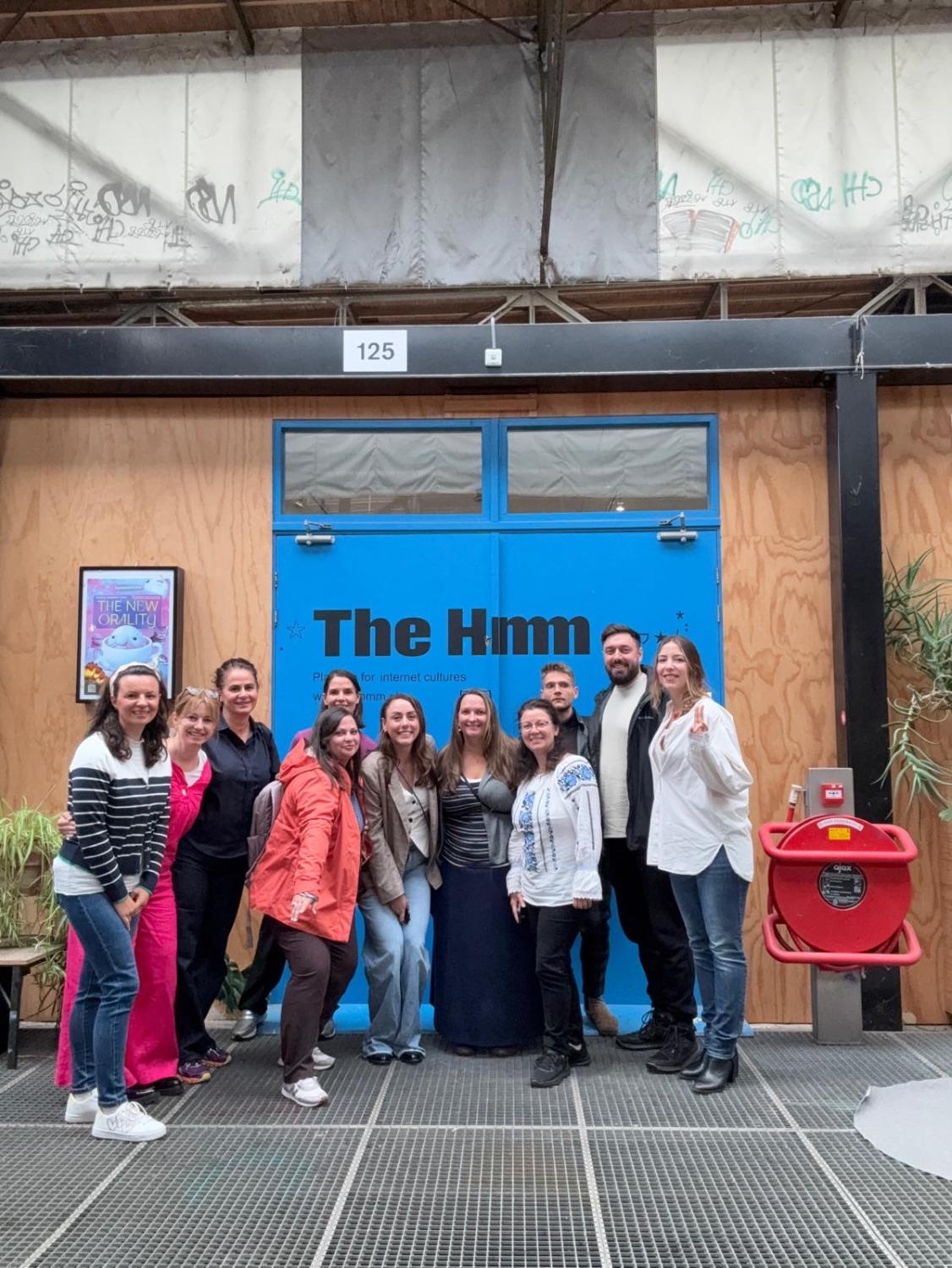
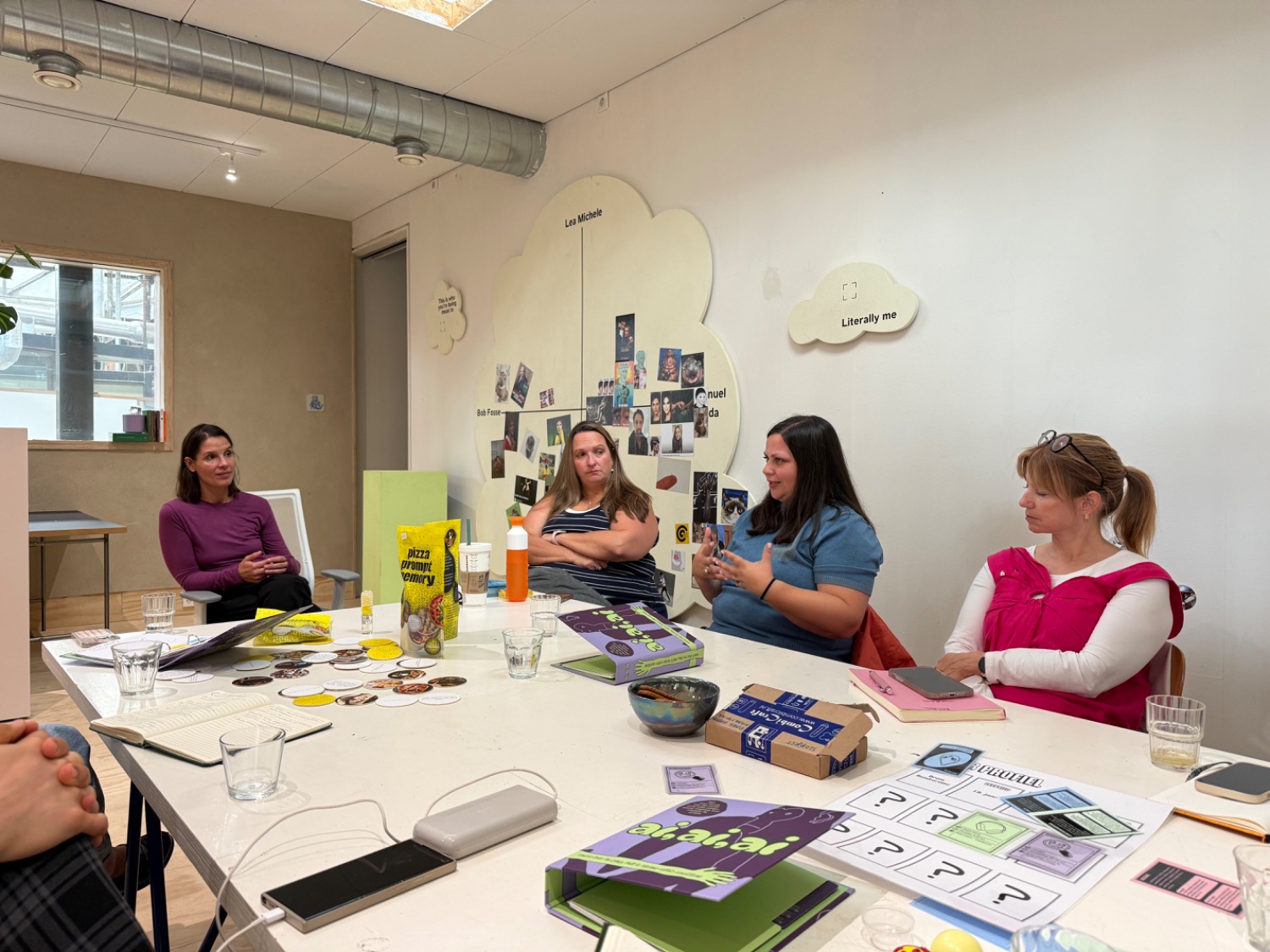
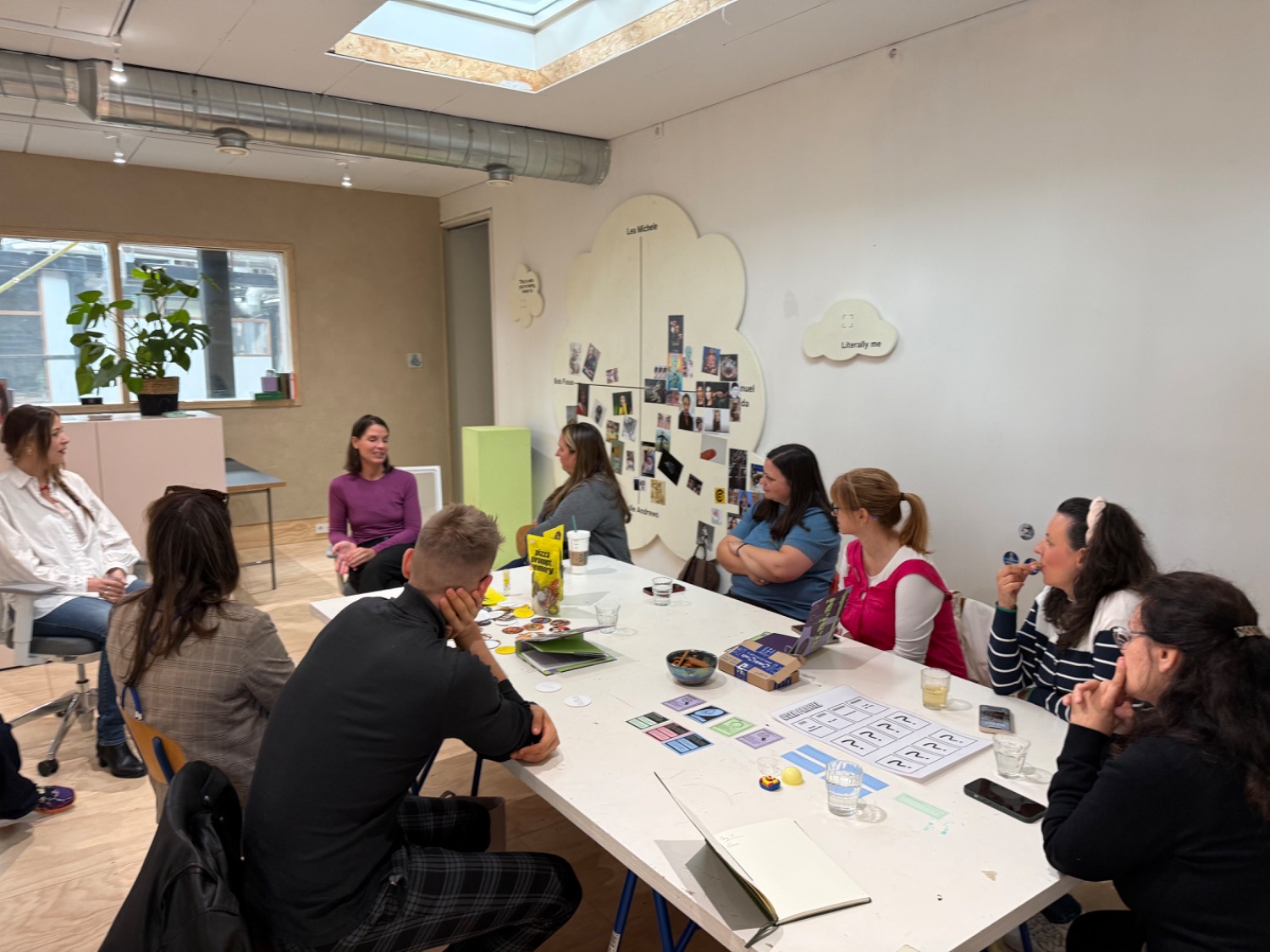
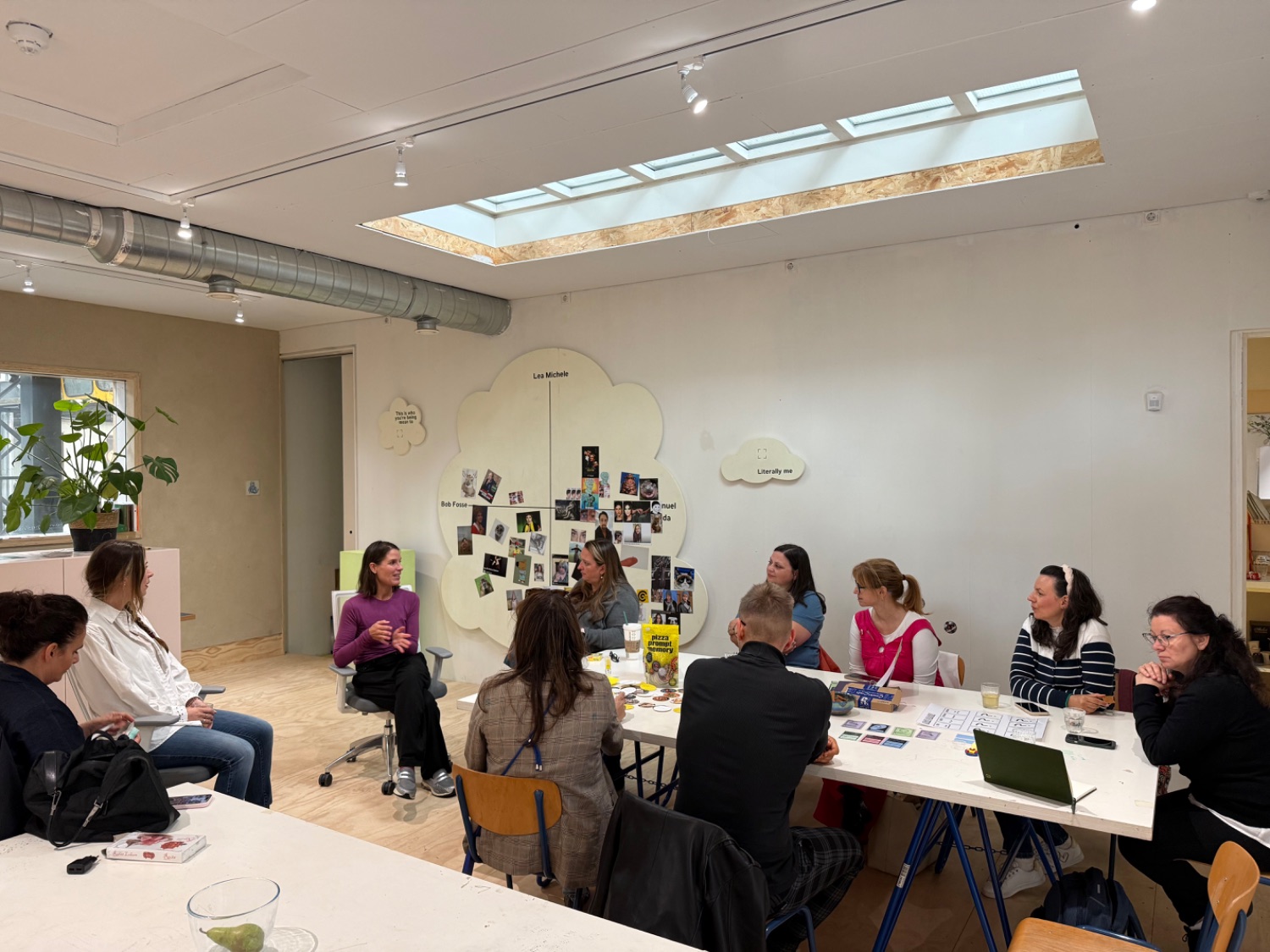
On the second day we started our visits out in the city. The Hmm welcomed us to NDSM-Plein, a former shipyard turned creative space, and asked us a question we had not thought of: how do you learn about AI without devices? Their answer is board games — "Ai, ai, ai", "Pizza Prompt", "Slopject" — and prompt battles, in which people compete to write instructions for a model. We left with a set of games as a gift, which we will test with young people in Romania.
We then went back to the previous day's training to hear how each of us had experienced it, and opened up the Erasmus+ map: Key Actions 1 and 2, Youthpass and the 8 key competences. For AI4ALL, who are starting their first Erasmus+ project right now, the discussion came at exactly the right time. The day ended at the OBA library — a place of direct interest to us, through our collaboration with the Bucharest Metropolitan Library.
- →How a small team such as The Hmm funds itself and organises its work.
- →How they run their activities in Amsterdam schools.
- →How they reach young people from disadvantaged backgrounds and keep them in the programme.
03
The National Agency, Huis van Vrede and the TUMO model
Erasmus+ National Agency · UtrechtHuis van VredeOBA-Next · TUMO
On the third day we set off early for Utrecht, to the Dutch Erasmus+ National Agency, where we were received by a Youth Work Outreach Officer from the Netherlands Youth Institute. We compared the two youth work systems and found how differently the same profession is understood in Romania and in the Netherlands — including what that means for funding and for the impact a programme has at local level.
We came away with a stronger conviction: youth work at local level deserves to stay at the centre of our strategy, with more community members involved. We had lunch at Huis van Vrede (House of Peace), a community centre with a restaurant that supports disadvantaged people in the neighbourhood.
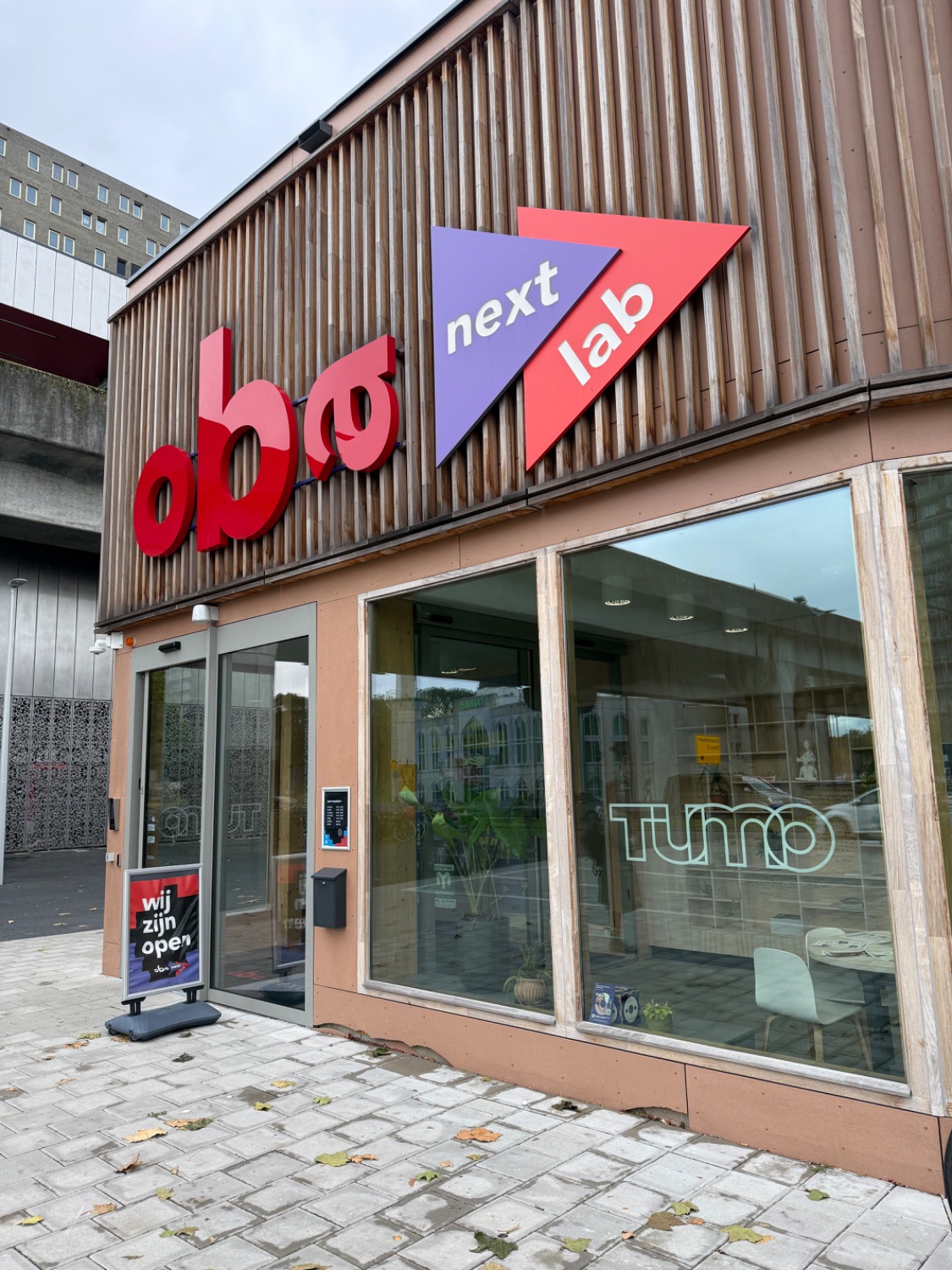
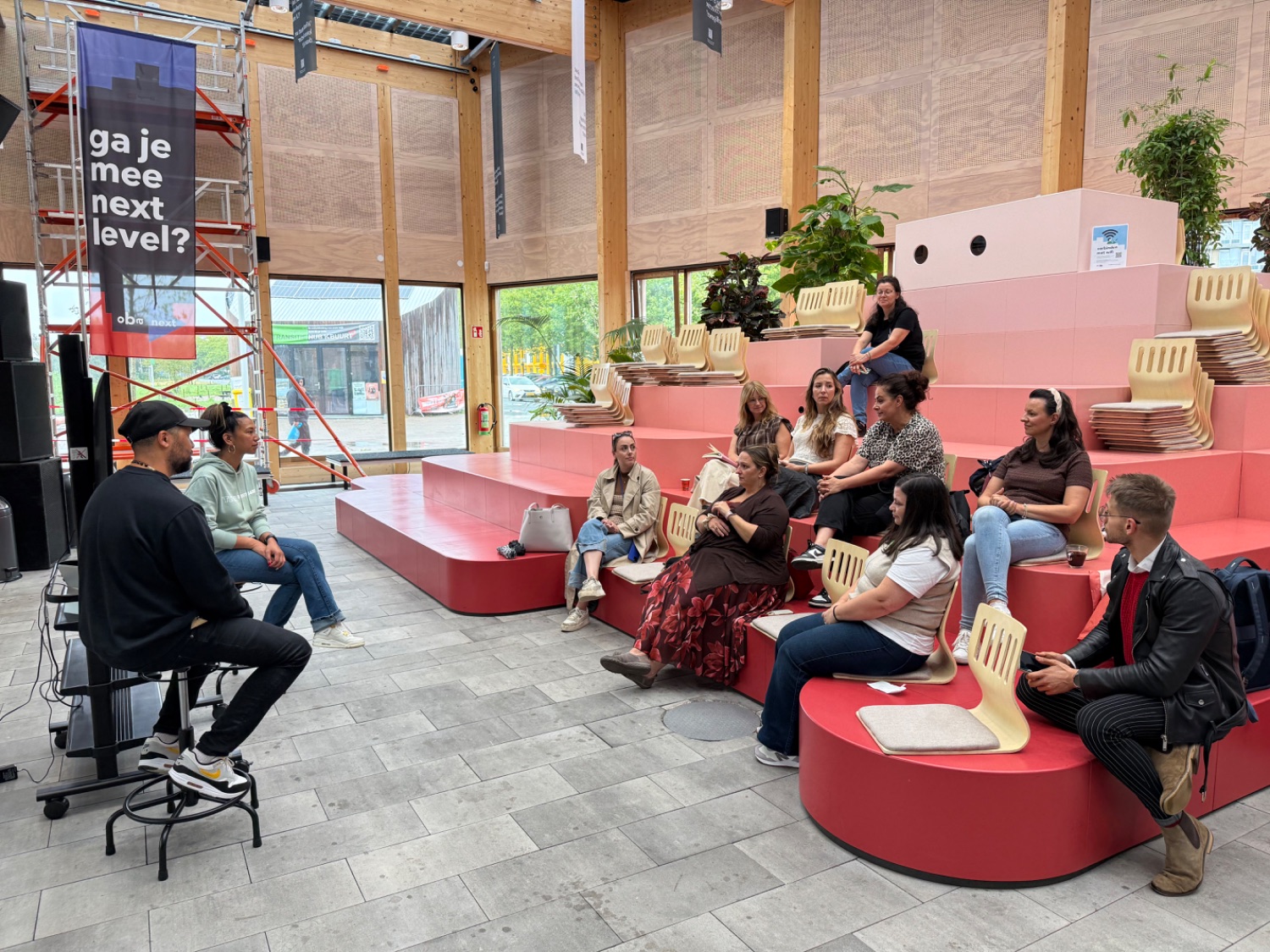
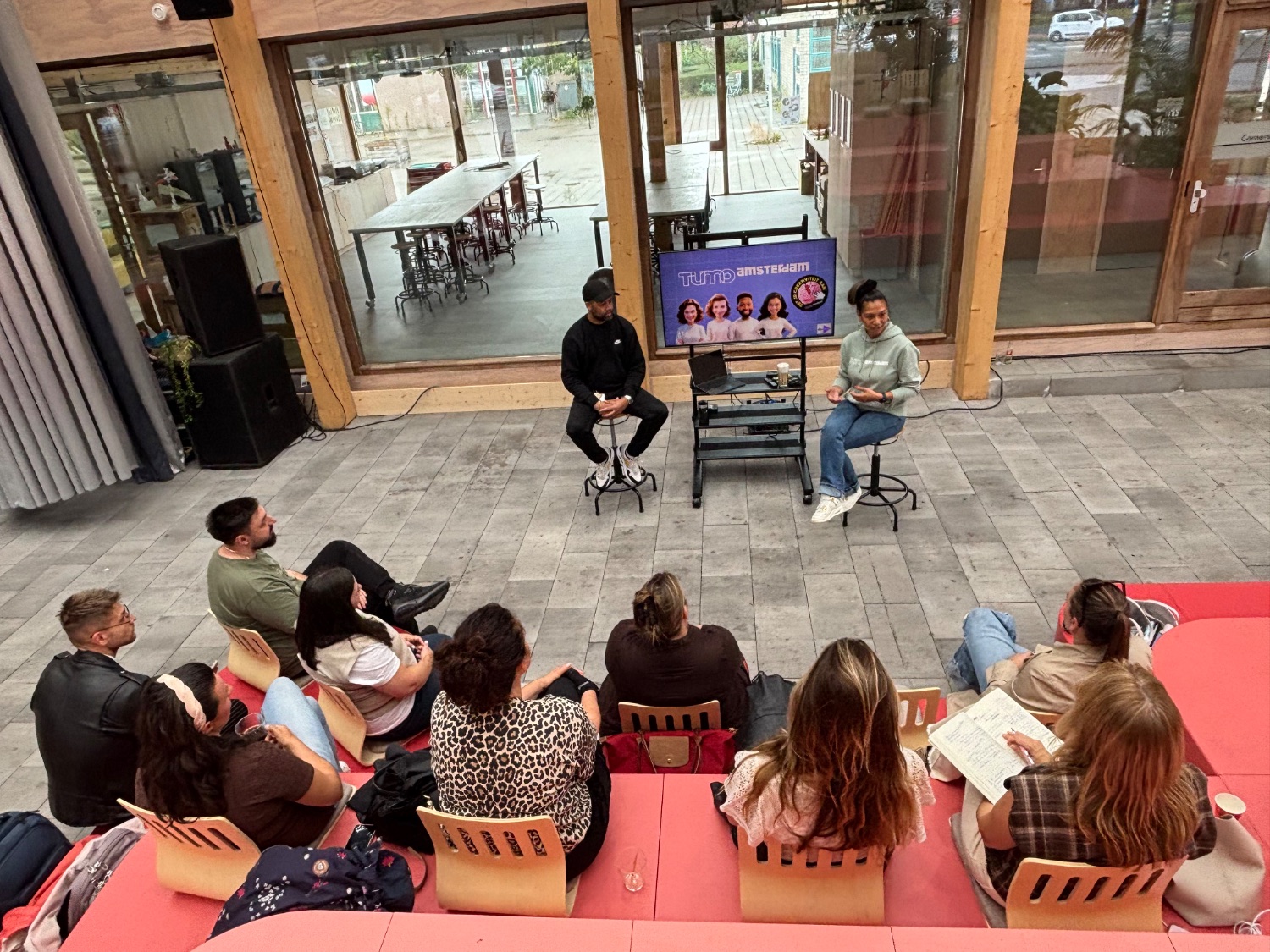
In the afternoon we arrived at OBA-Next, in Amsterdam South-East, one of the city's most disadvantaged neighbourhoods. Here the OBA library has brought in the international TUMO model as a pilot project, to find out whether it can work in other libraries too. This was the part of the visit that stayed with us the most.
Learning model
How TUMO works
TUMO is an international initiative that started in Armenia and has been franchised in more than 20 countries. The founders presented its structure and learning method to us together with young people from the neighbourhood, and the principles for those using the free services are as follows:
No grades, no teachers
Instead of traditional teachers there are learning coaches. There are no failures and no mistakes, only tasks left unfinished.
14 fields of study
Programming, robotics, video game development, graphic design, animation, digital music, film and 3D modelling. And now AI as well.
Three learning formats
Self-guided activities at a computer, hands-on workshops and project labs run by international experts.
300 young people, aged 12–18
From a less advantaged context, supported in their work by large private companies such as Adobe, Uber and Apple.
One relevant aspect was the way the initiative is funded, from public and private sources, within the library: a temporary setup, yet organised exemplarily — utility connections, climate control, state-of-the-art hardware and software. The facilitators and coaches play an essential role in helping young people move towards the parts of Amsterdam with more opportunities.
The day ended with a shared reflection, in which participants named the highlights and what can be put into practice. The AYI team reflected on how TUMO can inspire the CompassHub project, and on how AYI's games can be improved with the principles used by The Hmm.
04
Project ideas and next steps
Curiosity VC
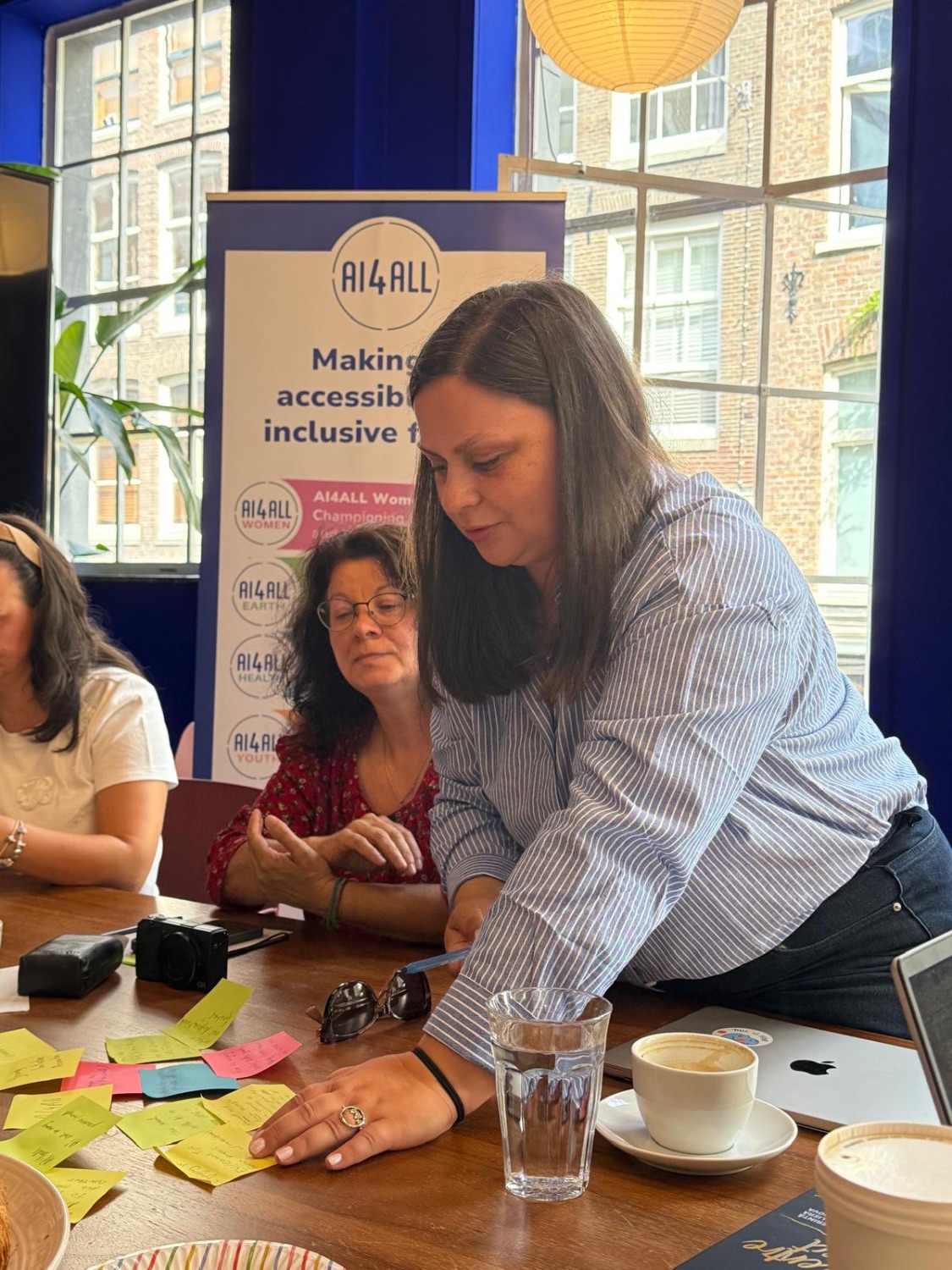
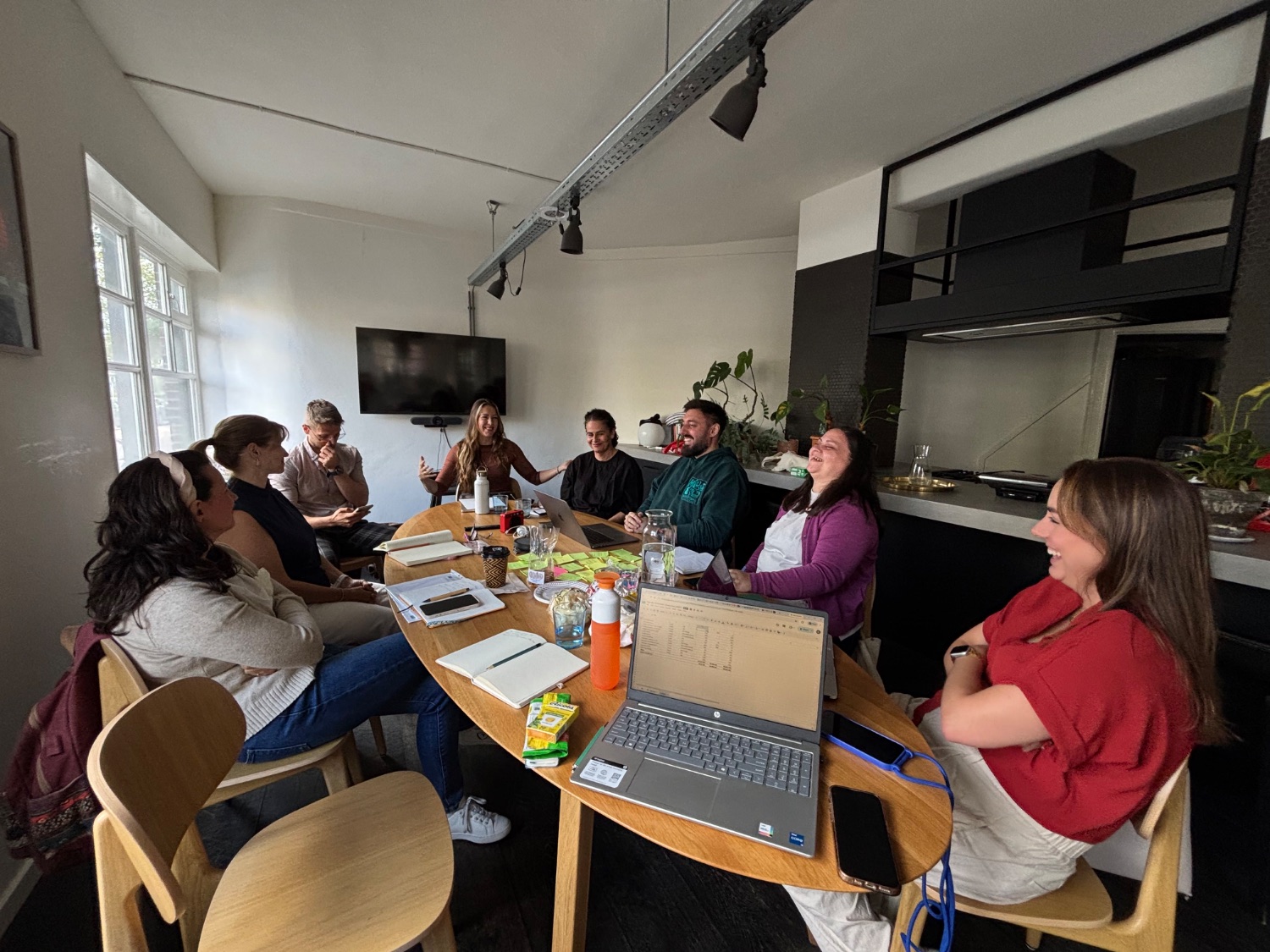
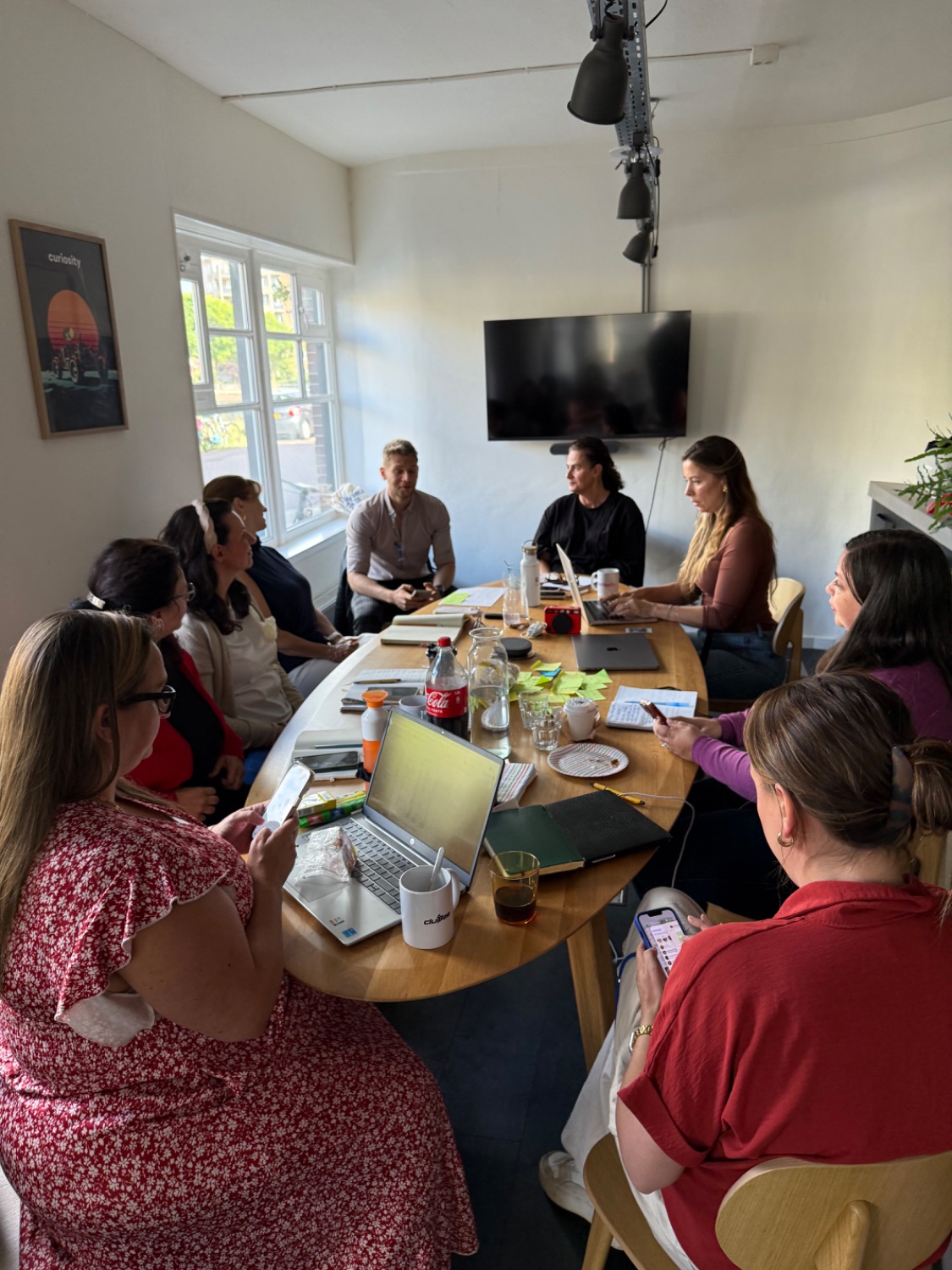
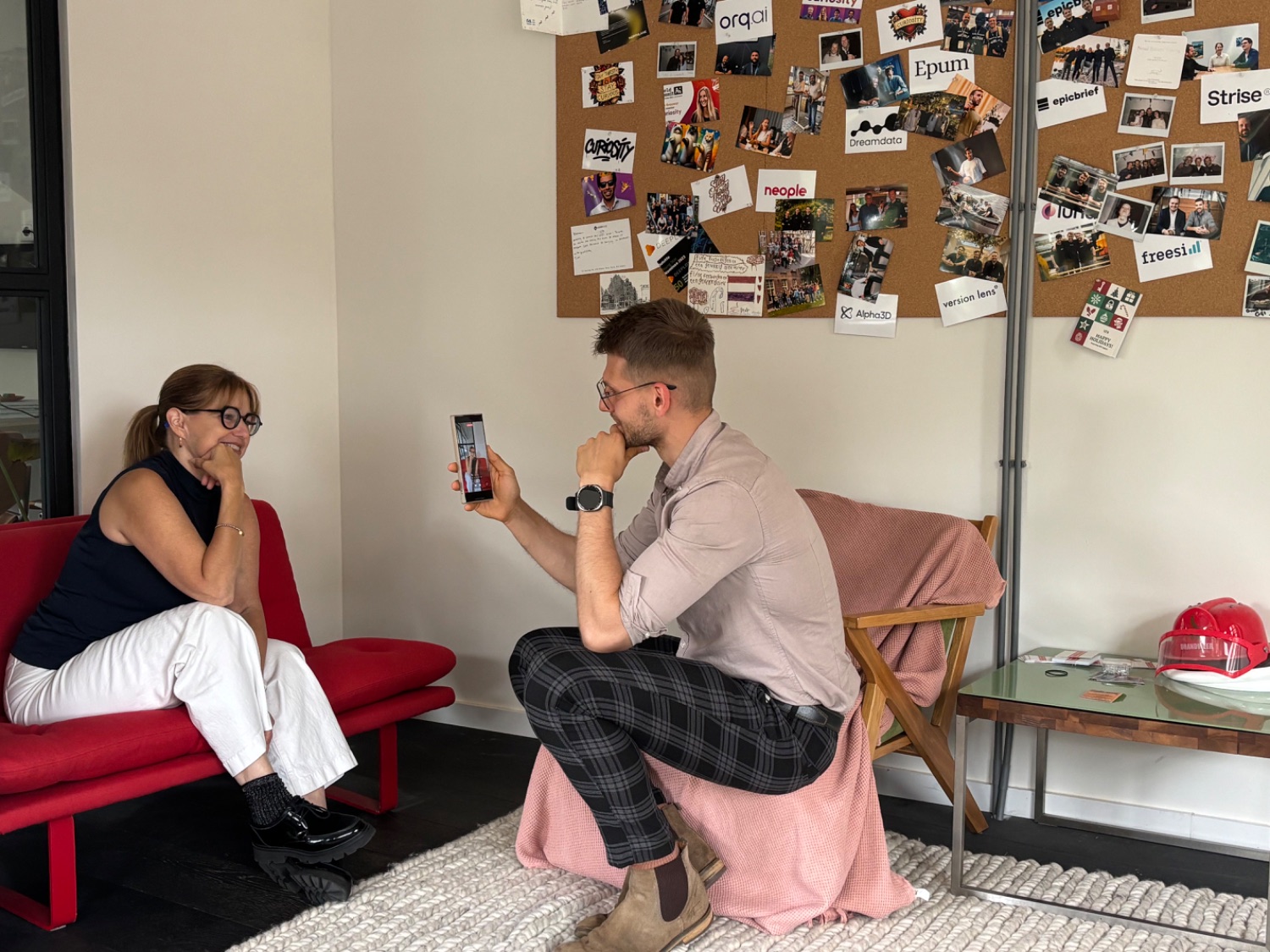
The last day was about what comes next. At Curiosity VC we sat down around the same table and put concrete project ideas on paper, with the October 2026 and March 2027 deadlines ahead of us.
We also came back to a question that concerns both organisations: how do you keep a young person motivated in the long run? We shared the challenges we have in common and what has worked for each of us so far, then settled the practical side — Erasmus+ accreditation and the next steps in AI Intersections Lab, including the AI4ALL team joining the training in November 2026 — and closed the visit with a round of evaluation, in which everyone said what they were taking home.